
 Rutger
 Celestin
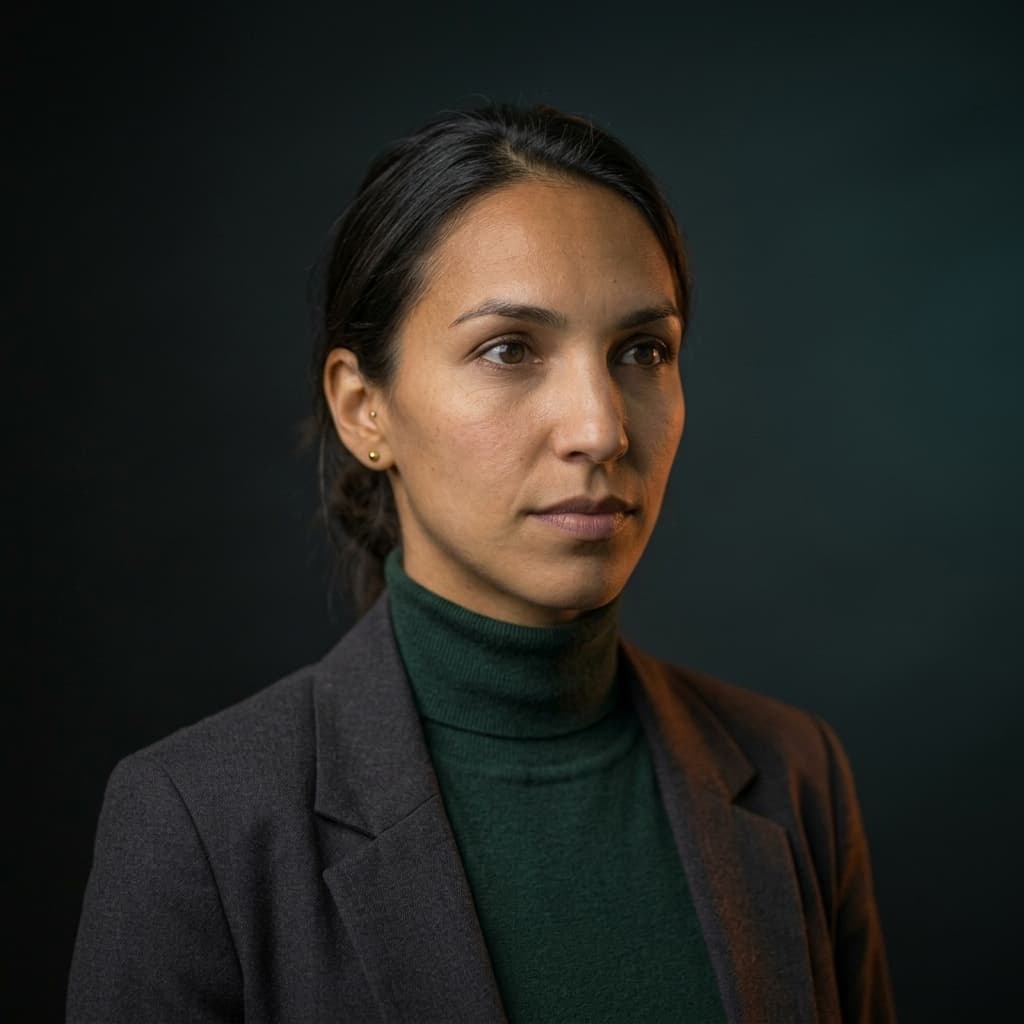 Marie
Marie
00:00 / 10:04
Op deze site: The Evolution of Video Models.
TRANSCRIPT
- Rutger
- Welcome back to The Seam. I'm Rutger — and today I actually want to *learn* something on the air, so I've brought two people who learn it completely differently. To my left, a man who needs no introduction in about forty countries — neuroscientist, runs the biggest thinking-person's food channel on the internet, and, it turns out, a complete addict of generative video. Dr. Célestin Mukeba.
- Celestin
- [warm] Rutger. It's a joy. Although "addict" is strong. I prefer… enthusiastic daily user. With a problem.
- Rutger
- [laughs] And — keeping us all honest, as ever — Marie.
- Marie
- Hello. I'm here to understand it. Not to be sold it.
- Celestin
- [delighted] That is the correct attitude. I will try to earn it.
- Rutger
- So here's what this is, if you're just joining. We're trying to actually understand the new wave of AI video — the Veo lineage, and the new interactive one, Omni. And instead of one explainer voice, you get three ways in. I reach for metaphors till it clicks. Célestin actually uses this stuff every single day. And Marie wants to know what it's *for*. Three people, one topic, three completely different doors. Let's see which one gets us inside.
- Marie
- I give it twenty minutes.
- Rutger
- Okay. Célestin — start me at the beginning. Pretend I've heard the words "AI video" and nothing else. What actually *is* the thing.
- Celestin
- Simplest version: you describe a moving image in words, and a model gives you back a few seconds of video. "A slow push-in on a bowl of ramen, steam rising, warm window light." A few seconds later — there it is. Moving. Lit. Real-looking.
- Marie
- From just the sentence. No footage.
- Celestin
- No footage. No camera, no kitchen, no steam. It has watched enough of the world to imagine what that sentence should *look* like, moving.
- Rutger
- See, this is where my brain reaches for a — hold on, let me find it. It's like… [thinking] it's not a camera, it's more like… a very, very well-read film crew that has never left the building. You describe the shot, and they go "ah, yeah, one of those," and they just… produce it. From memory. From everything they've ever seen.
- Celestin
- [pleased] That's good. That's actually close to what's happening in there.
- Marie
- Mm. And at the start — be honest — it was rough.
- Celestin
- Oh, at the start it was a charming disaster. Six silent seconds, and if a hand reached for a cup the hand might have… six fingers. Beautiful light, nightmare anatomy. But watch the lineage — and this is the part people miss — each step didn't just get prettier. Each step fixed a *sense*. First it learned to hold an object still without melting it. Then it learned longer shots. Then — and this was the big one for me — it learned *sound*. The clip arrives with its own audio. The footsteps match the feet.
- Rutger
- Wait — it generates the sound *with* the picture? Not added after?
- Celestin
- With it. Same breath. Which, to a neuroscientist, is the interesting bit — because that's how *you* work. Your brain doesn't record sound and vision on two tapes and sync them later. It builds one event. The model started doing the same thing.
- Marie
- [a beat] …Okay. That's a better explanation than I expected.
- Celestin
- [warm] I get that a lot. Usually phrased less kindly.
- Rutger
- [laughs] So where does Omni come in? Because you got genuinely excited on the phone about Omni.
- Celestin
- Omni is the one I can't stop using. Everything before it, you wrote one perfect prompt and prayed. One shot. Like ordering a dish by letter and hoping the kitchen reads your mind. Omni is a *conversation*. You generate, you look, and you say "good — now move the camera left, keep everything else." And it does. And you say "now it's evening." And it's the same scene, in the evening. You're not re-rolling the dice. You're *directing*. Turn by turn.
- Rutger
- Oh — okay, that's the metaphor, that's the whole thing right there. It went from a vending machine to a — to an actor. You don't re-buy the actor, you give the actor a note. "Again, but sadder." "Again, but slower." And they *remember* the last take.
- Celestin
- [genuinely lighting up] Yes! And the remembering is everything. That's the leap. Continuity. It holds the world steady while you change one thing.
- Marie
- [quiet, a little impressed] …Huh.
- Rutger
- Marie. That "huh" was almost enthusiasm.
- Marie
- It was a "huh." Don't push it. [a beat] But — okay. Here's mine. Because it's lovely that he can make evening ramen. What do I *do* with this? On a marketing team. Monday. Be concrete.
- Celestin
- Ah — good. Honest question, honest answer. Three things, off the top of my head, that I actually do. One: concepting. You have an idea for a campaign — you used to draw a stick-figure storyboard and hope the room imagined it. Now you show them the *moving* version, in an hour, before anyone's spent a euro on a shoot.
- Marie
- So you test the idea before you fund it.
- Celestin
- Exactly. Two: variation. The hero film is shot, it's real, it's expensive — but now you need it warm for one market, cooler for another, a vertical cut, a fifteen, a six. The boring, infinite versioning that used to eat a week —
- Marie
- [cutting in] — that's the part everyone underestimates. The versioning is most of the actual job.
- Celestin
- [nodding] It *is* the job. And three — and this is the one I love — you can previsualize a thing that would be impossible or insane to shoot. The product floating through the surface of the ocean. The city built out of the cereal. You see it, you feel whether it's any good, and *then* you decide if it's worth doing for real.
- Marie
- [a beat] That's… genuinely useful. All three of those are real.
- Rutger
- Hold that — Marie agreeing twice in one episode, someone mark the tape — let me grab a quick word from the people quietly paying for all of this.
- Rutger
- [coming back] Right. We're back. Célestin — let me push on the exciting one, because I want to make sure we're not just being dazzled. Omni, the directing thing. What's the catch?
- Celestin
- [thoughtful] The catch is the same catch as everywhere else, honestly. The model will happily give you a *competent* version forever. Smooth, plausible, fine. The taste is still yours. It keeps the beat — flawlessly — but the swing, the choice of *which* evening, *which* note to the actor… that's you. If you don't bring a point of view, you get beautiful nothing. At scale. Instantly. Which is its own kind of danger.
- Rutger
- That's the thing I keep landing on with all of this. The tool got incredible at the *how*. Which means the only thing left that really matters is the *what*, and the *why*. The judgment.
- Marie
- So the skill isn't prompting. It's knowing what's good.
- Celestin
- [warmly] Marie. Yes. That's the entire sentence. It was always that. We just used to be able to hide behind the difficulty.
- Marie
- [a beat, then almost grudging] …You're very good at this, you know. The explaining. I came in to be skeptical and I've written down four things.
- Celestin
- [genuinely touched] That — coming from you, I'm told — is a standing ovation. Thank you.
- Rutger
- [laughs] It really is. She fact-checks the weather. Okay — land it for me, both of you. Célestin, one line: why should someone who isn't a film person care?
- Celestin
- Because the gap between "I can picture it" and "I can show you" just collapsed. For everyone. That's not a film story. That's a *human* story.
- Rutger
- Marie. One line.
- Marie
- Stop calling it a video tool. It's a previsualization tool that happens to output video. *That's* the use case.
- Rutger
- [pleased] Ooh. That's better than mine. Mine was just "it's an actor with a memory." Right — I have to do the bit.
- Celestin
- Of course. The honest part.
- Rutger
- None of this is a Google position — it's my own read, on my own site. The voices here are synthetic, including, a little uncannily, mine. Célestin is a wholly invented character — a fictional neuroscientist who cooks. And Marie —
- Marie
- Marie is real enough to remain unconvinced about most things. Just not, annoyingly, about this.
- Rutger
- [laughs] That's our button. Three doors, same room — the metaphor, the use, and the person who actually uses it every day. Go make something you could only picture before. Goodnight.